Global healthcare logistics passed a critical threshold in the summer of 2026. We are no longer talking about the evolution of supply chains; we are witnessing a radical systemic shift. While drone networks from Zipline dominate U.S. airspace and autonomous e-bike fleets relieve congestion in metropolitan centers like Berlin and London, the core problem remains unsolved: The lack of Semantic Intelligence.
The $155 Billion Market Needs a Brain, Not Just Muscles
Current market data from Market Research Future (July 2026) projects that the global healthcare logistics market will exceed $155 billion by 2035. This development is driven by two unstoppable factors:
- Regulatory Pressure (DSCSA): With the final implementation deadline of the U.S. Drug Supply Chain Security Act in November 2026, market participants worldwide are forced to provide a seamless, interoperable data structure. If you don’t „speak“ digital, you are out of the game.
- Payer Deficits: As early as 2012, the German healthcare system alone recorded direct costs of over €4 billion for patient transport. Today, in 2026, these costs have exploded due to demographic shifts and inflation.
The Meta-System Concept: > mediTaxi < as the Operating System for Medical Mobility
In my previous analysis,Why Global Healthcare Systems and Medical Logistics are Approaching a Critical Inflection Point I described the critical inflection point. However, the solution does not lie in hardware. The problem for logistics giants like DHL, UPS, or Maersk is not a lack of vehicles; it is the lack of a specialized brand identity and a semantic clearing matrix.
This is where the > mediTaxi < concept enters the stage. It acts as an omnipresent meta-system—comparable to Booking.com for the travel industry. It is the neutral, trusted interface that aggregates all players: taxis, Ubers, drones, and emergency responders.
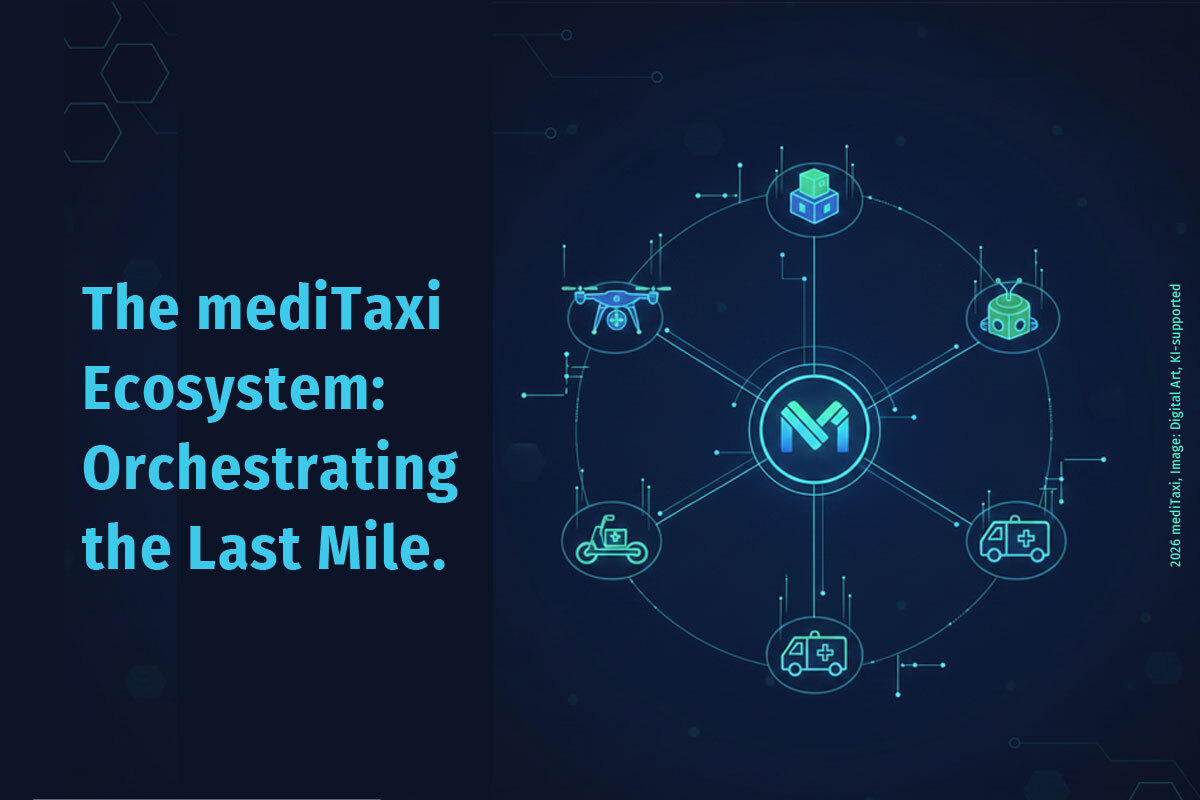
Core Components of Transaction Management:
- Semantic Clearing Matrix: The system identifies the responsible cost center during the booking process through a semantic matrix. The verification of eligibility by the health insurer occurs in milliseconds—before the journey begins.
- Asset-Light Scalability: mediTaxi® owns no tires; it owns the data flow. It is the „Semantic Clearing Layer“ that seamlessly integrates into existing Transport Management Systems (TMS).
- Proven Efficiency: By automating digital billing and standardizing processes, a reduction in Total Cost of Ownership (TCO) of at least 10% is achievable. With an annual savings potential of approximately €400 million in the German market alone, the economic leverage for global integrators is massive.
Conclusion: Who Controls the Gateway?
The future of medical logistics will not be won by the „last mile“ on the road, but by the mastery of branding and transaction data. Whoever controls the gateway—the brand trusted by patients and insurers alike—controls the market.
With its global domain portfolio (medi.taxi / meditaxi.com) and registered trademark, mediTaxi is prepared to fill this vacuum. It is the definitive answer to how we ensure resilient, efficient, and patient-centered logistics infrastructure in 2026.
Strategic Review & Acquisition Inquiries
The comprehensive Business Case > mediTaxi < – Global Medical Mobility & Logistics Service“ is currently available for private strategic review by institutional partners and qualified investors.
Given the current market inflection point and the 2026/27 regulatory deadlines, we are facilitating a streamlined acquisition process for the > mediTaxi < brand infrastructure and IP assets.
For inquiries and access to the confidential executive brief, please contact: pas@schweiz.biz
……………………………………………………………………
SCHWEIZ.BIZ NEWS
Redaktion (pas)